SLIDER

WELCOME TO BLOGGER'S BOOKSHELF...


where our team of writers love to talk all things books, sharing reviews, features, lists, interviews and more.

Getting lost in a book is escapism at it's finest and it's what everyone who contributes here thrives on.

NEWSLETTER

Historical
Showing posts with label Historical. Show all posts

Wednesday, 27 May 2020

Daisy Jones & The Six | Taylor Jenkins Reid | Review

Cover image via goodreads.com

This month I read Taylor Jenkins Reid's most recent release Daisy Jones & The Six for the third time and realised that I had never posted a review of this book, despite it being one of my absolute favourites. This time around I wanted to share not a full review, but some of my thoughts as this book certainly deserves a spot in our BB archives.

Set during the 60's & 70's the book tells the story of how Daisy Jones, a beautiful young woman with a natural talent for singing, and rock band The Six came together and rose to fame. It's an intense ride and includes all of the highs and lows experienced along the way, told through a series of interviews with members of the band as well as family members and those who worked with them during their career. The main charcters are Billy Dunne (frontman of The Six) and Daisy herself, but there are a whole host of other interesting people to be found within the pages of this book too. I'm sure I'm not alone in listing Camilla, Karen and Simone as particular favourites.

As mentioned in my review of The Seven Husbands Of Evelyn Hugo, Taylor Jenkins Reid has a way of making all of the characters she creates feel genuinely real. For me, one of the most effective ways she makes the story feel more realistic is by including contradictions between the different characters versions of events. One moment you'll hear something stated as a fact from one character only for another character to say the complete opposite just seconds later. You're left never really knowing exactly what happened and these moments are some of my favourites from the book.

One of the most unique things about Daisy Jones & The Six is the interview format. In a recent review over at This Splendid Shambles Anjali mentioned that for her the format of the book took away some of the emotion and therefore her connection to the characters. Whilst I would personally pick up a title in this format ordinarily, I can fully appreciate that it isn't for everyone. I have read Daisy Jones both as an ebook and as an audiobook and would suggest that listening to the audiobook would likely make the story more enjoyable for you if the interview format doesn't sound like your thing. With it's full cast of characters who bring extra personality to the story, to me it feels just like listening to a captivating podcast series about a real band and it's definitely my favourite way to read this book; I could happily listen to it over and over!

Follow
No comments

Friday, 8 May 2020

The Seven Husbands of Evelyn Hugo | Taylor Jenkins Reid | Review


Erin was right, The Seven Husbands Of Evelyn Hugo is a great read.

In 2019, Erin reviewed The Seven Husbands Of Evelyn Hugo, and I have to admit, while I enjoyed reading the review, as I do all our reviews, I didn't think I'd ever pick up this book. Historical fiction isn't a genre I usually spend much time in (unless it's YA historical fiction), nor is the adult genre in general. I'm definitely a Young Adults sort of reader, with a love for fantasy, too. But not general/contemporary adult fiction.

But then our Blogger's Bookshelf book club theme for May is 'a book with a number in the title' and I didn't have any books on my shelves that met the criteria that I hadn't already read. 'Perhaps it's time', I thought. 'Time to give Evelyn a chance.' I'm so glad I did.

You can head back over to Erin's review to find out a little more about the book, as I don't want to repeat things. But I did just want to make a few comments.

“Sometimes reality comes crashing down on you. Other times reality simply waits, patiently, for you to run out of the energy it takes to deny it.”

Like I said, I'm not a big reader of the genres this book fits into usually, but from the first pages I was drawn into the story. In fact I actually started this book before the book club for May began (oops shh), and I did so accidentally. I had it on my Kindle and clicked open the first page and read it ... and found it very hard to put down. There were many nights in a row where I read for too long and spent too much time in the story.

For the most part, The Seven Husbands Of Evelyn Hugo is a classic Hollywood tale, one you'd definitely see on the big screen. A beautiful girl wanting to be big in the film industry, does whatever she can to get there, even if that includes lying, cheating, sleeping, and marrying her way to the top. She makes it, of course she does, because she's strong and determined and passionate about chasing her dreams. But at what cost?

It was quite different to what I was expecting - although if you asked me what I was expecting, I don't think I could give you an answer - but it was captivating and heartbreaking all the same. While there was an ongoing question throughout the tale, I knew what it was going to be before it was revealed in the last few pages, and knew the answer from the moment a key character was introduced. Nevertheless it was still stunningly done, and I have to commend Reid on her writing and storytelling.

What I found most captivating about this book, and Erin mentions it in her review too, was the characters. Reid has this way of writing her characters with such depth it's like they were actually real people. While many characters were uncomfortable and unlikable, there were some that I really enjoyed reading about ... which of course made it all the more heart wrenching when those characters were ripped away. (If that seems like a spoiler, it's not really. The book covers Evelyn's entire life from when she was a young girl to the moment she employs a writer for her biography - it's a 70 something year timeline, people are going to die.)

In case it wasn't clear from the beginning, I really enjoyed The Seven Husbands Of Evelyn Hugo, so much so that I'm going to check out some of Taylor Jenkins Reid's other books. Luckily, Daisy Jones and the Six has a number in it too, so I might just read another for book club!

Have you read The Seven Husbands Of Evelyn Hugo? What did you think?
No comments

Friday, 16 August 2019

A Sky Painted Gold | Laura Wood | Review


As Lou is swept into the Cardew siblings' dazzling world of moonlit parties, unrivalled glamour, and whispered secrets, can she stay true to her self... and her heart?

Lou has always been fascinated by the grand Cardew house, standing empty on the small island across the causeway from her tiny Cornish village. So fascinated, in fact, that she often walks, or swims at high tide, across to the island to pick apples from the orchard, or, more recently, to sneak in through a broken window and read Agatha Christie novels from the house's vast library, or to write her own detective stories in her notebook. With the Cardew family never visiting their Cornish home, Lou has found it the perfect place to get away from  her many siblings for a few hours, and enjoy the quiet of the big house. Until, of course, the Cardews return, and Lou is almost caught redhanded.

Luckily for Lou, the Cardew siblings, Robert and Caitlin, don't seem to mind that she has been breaking into their house, and she soon finds herself in their inner circle, invited to all of Caitlin's grand parties, and even with her own bedroom in the house. Caitlin and Lou fast become friends, but things are more difficult with Robert, the lord of the house, who Lou finds more than a little rude. Lou is charmed by the house and by the Cardews' life, and it isn't long before she finds herself spending more time on the island sunbathing with Caitlin and bickering with Robert, than she does back at home with her newly married sister, Alice. As the summer goes on, Lou has to face the fact that eventually Caitlin and Robert will return to London, and she'll need to decide what her life will look like when those grand parties end.

A Sky Painted Gold is a perfect summer read. Lou's story is filled with the kind of glamour you might expect from a novel that takes place in a grand house in the 1920s, but it also has the heart and depth to back up that shining facade. Lou sees her sister Alice, happily married to her childhood sweetheart and, worried that that is the path expected of her too, throws herself into the escapism of the Cardews' lives, but, of course, she eventually learns that throwing these lavish parties is a kind of escapism for Caitlin too. Lou is sympathetic and, at times, naive, but she cares so deeply for the people around her that this, in turn, makes it impossible for the reader not to care about her. Even as Lou begins to worry that she might be little more than a novelty among her new friends, she still only wants to help them, even as it starts to damage her relationship with her own sister.

There is romance of more than one kind in this story, and Wood addresses many of the issues that faced young people of Lou's time, and still do today, but ultimately this is a true coming-of-age story, and amongst the fun and the frivolity and possible falling in love, Lou must really decide what she wants her life to be. She cannot party with the Cardews forever but she does not necessarily want to follow Alice down the aisle right away, either, and if there is one thing she learns from the Cardews it is that she can only put off thinking about it for so long. It is a delight to read about Lou's summer with the Cardews, truly a summer of self-discovery, and it is certainly a story that I will read again and again.
No comments

Friday, 7 June 2019

The Lady's Guide to Petticoats and Piracy | Mackenzi Lee | Review


Felicity Montague must use all her womanly wits and wiles to achieve her dreams of becoming a doctor - even if she has to scheme her way across Europe to do it.

The Lady's Guide to Petticoats and Piracy is the sequel to Mackenzi Lee's incredibly popular novel, The Gentleman's Guide to Vice and Virtue, (you can read Anjali's review of The Gentleman's Guide to Vice and Virtue here) and it is every bit as exciting and endearing as its predecessor.

A year after her brother's unintentionally eventful grand tour, Felicity Montague is more determined than ever to follow Monty's example and live her life on her own terms. For Felicity this means studying medicine, opening her own practice one day, and very definitely never getting married. Unfortunately, living life on her own terms is far easier said than done. No matter how many medical schools Felicity applies to, the answer is always the same: women simply are not permitted to study medicine, and none of the men in charge seem particularly keen to change that. To make matters worse, the baker Felicity has been working for while trying to make her case to be allowed to study medicine has a question of his own and it's one that Felicity really doesn't want to answer.

At last though, it seems Felicity might have a chance to follow her dreams. An old friend is marrying a doctor Felicity greatly admires and she's had a tip that he might be more open to the idea of a woman working alongside him. There are only two problems with her plan. The first problem is that Felicity can't afford to go to Germany for the wedding. The second problem is that she hasn't spoken to Johanna in years so she isn't actually invited. The first problem seems to be solved when a mysterious young woman from Scipio's crew offers to pay Felicity's way if Felicity allows her to come, disguised as Felicity's maid, and Felicity is sure the second problem will be solved once she arrives on Johanna's doorstep. Unfortunately for Felicity, these soon turn out not to be her only problems.

Felicity Montague's character is perfectly summed up by the moment in the first chapter of this novel, in which she has just finished sewing up a wound on a man's finger and then been proposed to, and her first reaction to the proposal is to think that she would rather be tending to the finger again. She is a woman who doesn't quite fit in with the role society wants her to take, not least because she has no interest in marriage or romantic relationships at all, and her determination to be accepted into medical school, of course, lands her in plenty of trouble. Felicity makes plenty of mistakes along her road to what she thinks she wants, particularly taking the mysterious young woman, Sim, into Johanna's home without truly knowing her motives for wanting to be there, and underestimating Johanna herself because of her love of pretty things.

Felicity is, at times, stubborn, selfish, and difficult, and it is extremely refreshing to see a female character allowed to be those things. Of course, she learns her lessons in the end, but the place from which she starts makes watching her learn them, and watching her friendship with Sim and Johanna blossom, incredibly joyful. This is a novel that champions girls who know who they are and aren't afraid to show the world, even when the world doesn't like it. It also has pirates, magical sea creatures, adventure, intrigue, and a very large, very friendly dog. What's not to like?

If you enjoyed The Gentleman's Guide to Vice and Virtue, you are sure to love The Lady's Guide to Petticoats and Piracy, and if you haven't read either yet, I highly recommend you change that!

No comments

Friday, 26 April 2019

Romanov | Nadine Brandes | Review


The history books say I died. They don't know the half of it.

Following the revolution that forced her father's abdication, Anastasia 'Nastya' Romanov and her family, under the watchful eye of Bolshevik soldiers, are exiled to Siberia to await their fate, but Nastya has a secret that just might save them all. With the spell master, Rasputin dead and all other spell masters either working for the Bolsheviks or hiding from them, Nastya is the only one able to use the spells Rasputin taught her to ease her brother's pain, which is why Nastya's father trusts her with their family's final hope - a matryoshka doll given to them by the greatest spell master in Russia. When she needs it most, the doll will reveal a spell to Nastya, but until then she must keep it hidden from the Bolshevik guards.

Nastya knows she can't trust any of the soldiers, even the ones who seem to be kind. She especially can't risk any of them finding out about the matryoshka doll or the spells she uses to help her brother, but there is one guard who does not always act like the others, who sometimes seems as though he might not be the loyal Bolshevik soldier he acts like. Zash has secrets of his own, including a hidden bottle of spell ink and the way he sometimes looks at Nastya. Nastya harbours hope that Zash will prove to be a friend, or perhaps even something more, despite his Bolshevik uniform, but when the firing squad come for Nastya and her family, Nastya is crushed to see Zash holding one of the guns.

The exile and execution of the Romanov family, and the persisting rumours of Anastasia's survival, have been the subject of many stories over the years since the real life event. What Brandes's interpretation brings to this well trodden story is the addition of magic and romance in the young Anastasia's life. Anastasia, or Nastya, as she is known throughout the novel, is, in Brandes's hands, a feisty and stubborn young woman, who cares for her family above everything else. The entire Romanov family are presented in this story as a close-knit and loving family, one who any reader would sympathise with, which makes it all the more upsetting when the inevitable happens, and Nastya and her family must face their execution.

Romanov is a fantastical mix of history and magic, combining a realistic interpretation of the Romanov family's exile with a wild story of spells and spell masters. It feels, upon reading, as though Brandes has done a lot of research into the Romanov family's final weeks, which is perhaps why the first half of this story, which is more heavily based on real events, feels like a slightly different novel than the second half, which definitely takes a turn away from the realistic. This is not a bad thing, it is simply one way in which the two sides of this story play together to present a story for Anastasia Romanov that feels as though it could be true, provided, of course, one accepts that Rasputin really was a spell master and that he taught the young Anastasia a few tricks of his trade before his own execution. 

I received a complimentary copy of this book from Thomas Nelson through NetGalley. Opinions expressed in this review are completely my own.
No comments

Wednesday, 17 April 2019

The Seven Husbands Of Evelyn Hugo | Taylor Jenkins Reid | Review

the seven husbands of evelyn hugo taylor jenkins reid

The internet was right, The Seven Husbands Of Evelyn Hugo is a great read.

After opening with a New York Tribune clipping announcing that famous Hollywood star Evelyn Hugo will be auctioning off some of her most famous gowns to raise money for breast cancer research, we are introduced to magazine reporter Monique who, much to the surprise of both herself and her boss, is personally asked for by Evelyn to cover the event. As it turns out Evelyn has an ulterior motive; she wants Monique to write her life story and share it with the world.

The book spans several decades of Evelyn’s life, following her rise to fame and all of the heartbreak along the way, with each section relating to one of her seven famous marriages which were the subject of many newspaper headlines. By the end of the novel we also find out why Evelyn was so set on Monique being the one to tell her mysterious life story; an extra little twist that provides added intrigue throughout.

My favourite thing about the book would have to be how real the characters felt. This is something I know many people have noted about Evelyn in particular, as well as the characters of the author's latest release Daisy Jones and the Six (which I'm currently twenty-something in the library queue for, but am looking forward to reading!).

Whilst Historical Fiction is not usually a genre I reach for, I found that I really enjoyed the old Hollywood setting. The book tackles a range of important topics in an interesting way and is an immersive and addictive read. With complex and intriguing characters, the journey through Evelyn's life really makes this novel special.
No comments

Thursday, 4 April 2019

The Tattooist of Auschwitz | Heather Morris | Review


If you recall back in January the team at Bloggers Bookshelf brought you our Vow To Read selections for this year. I'm actually doing pretty well at my list and after finishing The Tattooist of Auschwitz near the start of March made it 3/5 read, and it's only the beginning of April!! Just watch me go downhill from here... the other two are sitting on my TBR pile staring at me every time I pick up another book instead of them. I can't help it if I have a review copy I need to read before a certain date, they'll always be more books I suppose. I should get around to them, but until then here's what I thought about The Tattooist and whether or not it met my expectations...


In April 1942, Lale Sokolov, a Slovakian Jew, is forcibly transported to the concentration camps at Auschwitz-Birkenau. When his captors discover that he speaks several languages, he is put to work as a Tätowierer (the German word for tattooist), tasked with permanently marking his fellow prisoners.

Imprisoned for more than two and a half years, Lale witnesses horrific atrocities and barbarism—but also incredible acts of bravery and compassion. Risking his own life, he uses his privileged position to exchange jewels and money from murdered Jews for food to keep his fellow prisoners alive.

One day in July 1942, Lale, prisoner 32407, comforts a trembling young woman waiting in line to have the number 34902 tattooed onto her arm. Her name is Gita, and in that first encounter, Lale vows to somehow survive the camp and marry her.

A vivid, harrowing, and ultimately hopeful re-creation of Lale Sokolov's experiences as the man who tattooed the arms of thousands of prisoners with what would become one of the most potent symbols of the Holocaust, The Tattooist of Auschwitz is also a testament to the endurance of love and humanity under the darkest possible conditions.


Before starting I'd heard a lot of good things and a few bad things so I went in with a lot of expectations, especially as my Mum had marked it 5 stars on Goodreads, and turns out they were met pretty well. I didn't realise until finishing that Heather Morris is actually a New Zealander, although now living in Australia, I assumed naively that she must be from Europe. I also discovered it was initially written as a screenplay which actually makes a lot of sense.

The writing style was rather different from what I've read in the past, especially historical fiction, and that must have been because of its screenplay heritage. The dialogue flowed the scenes and there were a smaller amount of scenic descriptions than you'd usually expect in a historical fiction novel. This actually made for easy reading and allowed you to flow from scene to scene easily even if there was an abrupt change of time or place.

The story was lovely although it was not that historically accurate as some lovely people on Twitter harassed me enough to let me know it wasn't after I posted my innocent one sentence review tweet. I didn't really mind that it wasn't historically accurate as it was the retelling of Lale's story from his memories. It's historical fiction, not a textbook about the happenings at Auschwitz.

I think the main thing that surprised me was what Lale was actually tattooing. I, again naively, thought he was some 'under the table tattooist' doing body art to the other prisoners without the guards knowing. A sort of last attempt at freely choosing what happened to their bodies, when in actual fact he tattooed the numbers onto each prisoner - the number that replaced their name. That didn't even cross my mind, so while it's not accurate down to the exact fact it definitely made me think differently about what happened during World War II and the Holocaust which I think was the general idea. 

I definitely do recommend it if you're into historical fiction, if you liked The Diary of Anne Frank and like to see a different perspective, or just want to learn more about what happened during that time.

Have you read it? What did you think?


No comments

Friday, 4 May 2018

The Guernsey Literary and Potato Peel Pie Society | Mary Ann Shaffer | Review


“I wonder how the book got to Guernsey? Perhaps there is some sort of secret homing instinct in books that brings them to their perfect readers.” 

January 1946: London is emerging from the shadow of the Second World War, and writer Juliet Ashton is looking for her next book subject. Who could imagine that she would find it in a letter from a man she’s never met, a native of the island of Guernsey, who has come across her name written inside a book by Charles Lamb…. 

As Juliet and her new correspondent exchange letters, Juliet is drawn into the world of this man and his friends—and what a wonderfully eccentric world it is. The Guernsey Literary and Potato Peel Pie Society boasts a charming, funny, deeply human cast of characters, from pig farmers to phrenologists, literature lovers all. 

Juliet begins a remarkable correspondence with the society’s members, learning about their island, their taste in books, and the impact the recent German occupation has had on their lives. Captivated by their stories, she sets sail for Guernsey, and what she finds will change her forever. - Goodreads


After a weekend of reading and finishing the two books I had brought away with me (seriously, Anjali, only two!?), I was in need of another novel to pick up. Thankfully the house I was staying in was just as much a library as my own, and I was soon flicking my way through The Guernsey Literary and Potato Peel Pie Society. I recognised the title from a movie I had seen the trailer for, and thought it would be another great book to read before I saw the film. And how right I was.

The Guernsey Literary and Potato Peel Pie Society is a wonderful story about Juilet, the writer, who makes friends with strangers down in the Channel Islands. The story is told in letters - a format which I don't actually enjoy and the reason I didn't give this book 5 stars - as Juliet corresponds back and forth with the society, as well as her best friend Sophie, her publisher Sidney, and various other people in her life. 

When Juliet goes to Guernsey to meet the people she's only ever written to and to write her book about their society, their relationships grow, fall apart, come back together, and new ones are formed. There's a little more drama alongside the writing of her book, a few more stories to be told, a man to avoid, and a man to find.

While the letter form is not my favourite, Juliet's personality was really apparent in her writing, and I can only imagine she would speak like she writes. I really loved her as a character, and some of her expressions and sentence were gold. Here's a sample:


  • “I don't want to be married just to be married. I can't think of anything lonelier than spending the rest of my life with someone I can't talk to, or worse, someone I can't be silent with."

  • “That's what I love about reading: one tiny thing will interest you in a book, and that tiny thing will lead you to another book, and another bit there will lead you onto a third book. It's geometrically progressive - all with no end in sight, and for no other reason than sheer enjoyment.” 

  • “Men are more interesting in books than they are in real life.” 


The other thing I loved about this book was that it was about books. It was a story-lover, writing a book about people who made a club for reading and talking about books. Brilliant! 

The movie came out in late April, and while I haven't seen it yet, I'm so looking forward to it. It stars Lily James, Matthew Goode and Michiel Huisman, and while the trailer looked a bit different to the book, I hope it's just as good.

Have you read The Guernsey Literary and Potato Peel Pie Society? Seen the movie? 
No comments

Sunday, 25 February 2018

BB Book Club | February 2018 Roundup | A Tyranny Of Petticoats

This year we decided to launch our very own online book club, with a new book for you to join us in reading every month. Our second pick, selected by Anjali, was A Tyranny Of Petticoats a YA Historical Fiction title featuring fifteen stories from fifteen different authors. Here's our February infographic to tell you a little bit more...

bb book club february 2018 infographic

Reader's comments & favourite quotes:

"Whilst I really enjoy short story collections Historical Fiction isn't a genre I usually read so it was interesting to step out of my comfort zone with this month's book club pick. One of my favourite things about the book was the fact that each story included a short authors note as I enjoyed reading about the inspirations behind the stories." - Erin @ A Natural Detour

"The quiet music swelling in the dark had been one if the most magical things she'd ever witnessed: a crowd of strangers united in one moving voice." - Elizabeth Wein

"Although I was only able to read 3 of the stories, I will go back and read the other ones at a later date, I like the short story style." - Cat

"I suppose even monsters can be afraid of the dark." - Leslye Walton
 

Thank you to everyone who read along with us this month! If you would like to get involved with next month's BB Book Club check back here tomorrow where Erin will be introducing her selection for March - we think you're going to love it! You can also sign up to our mailing list to make sure you don't miss out on any future book club updates.

Follow
No comments

Friday, 11 August 2017

The Gentleman's Guide to Vice and Virtue | Mackenzi Lee | Review


Image from Goodreads

Henry “Monty” Montague was born and bred to be a gentleman, but he was never one to be tamed. The finest boarding schools in England and the constant disapproval of his father haven’t been able to curb any of his roguish passions—not for gambling halls, late nights spent with a bottle of spirits, or waking up in the arms of women or men. 
But as Monty embarks on his Grand Tour of Europe, his quest for a life filled with pleasure and vice is in danger of coming to an end. Not only does his father expect him to take over the family’s estate upon his return, but Monty is also nursing an impossible crush on his best friend and travelling companion, Percy. 
Still it isn’t in Monty’s nature to give up. Even with his younger sister, Felicity, in tow, he vows to make this yearlong escapade one last hedonistic hurrah and flirt with Percy from Paris to Rome. But when one of Monty’s reckless decisions turns their trip abroad into a harrowing manhunt that spans across Europe, it calls into question everything he knows, including his relationship with the boy he adores. - Goodreads

The Gentleman's Guide to Vice and Virtue, by Mackenzi Lee was seriously one of my favourite books of the year so far (and probably still will be come the end of 2017). It was such a fun read and I found myself wanting to re-read it as soon as I put it down.

Monty, Percy and Felicity are headed off around Europe for what we might call their big O.E. (overseas experience), or their gap year, and while it seems like a jolly idea, things don't go they way Monty planned.

“We are not broken things, neither of us. We are cracked pottery mended with laquer and flakes of gold, whole as we are, complete unto each other. Complete and worthy and so very loved.” 

Monty longs for their year-long trip to be one of bonding and exciting adventures around the Continent before Percy is shipped off to college in another country, and Monty has to start being in charge of the family estate. Felicity is meant to be stopping her trip when they get to Paris so she can begin life as a proper young lady, but all she wants to do is go to university and become a woman of medicine.

When Monty does something rash (which actually happens on most pages of the book), the trio find themselves on a wild goose chase around Europe with a stolen artefact, meeting strange people, searching for miraculous cures, being attacked by highwaymen and joining a crew of pirates.

'That can't possibly happen all in one book' you say. Well, my friends. It can. We follow book-nerd Felicity as she overcomes womanly stereotypes, Percy as he deals with issues and bouts of discrimination over his race, and Monty has he falls more and more hopelessly in love with his best friend.

Beautifully written, The Gentleman's Guide to Vice and Virtue is a tale of friendship, of loyalty, of love, of family, of adventures to be had, and fights to be fought. It's 18th century Europe, it's pirates and highwaymen, it's upper class pomp and prestige, it's hilarious and witty, alarming and exciting, and beautiful and sweet all rolled into one.

As you can tell, I really loved this book, and I recommended picking it up if you're into your YA novels (period, or otherwise).
No comments
A Little In Love | Susan Fletcher | Review

Wednesday, 27 May 2015

A Little In Love | Susan Fletcher | Review

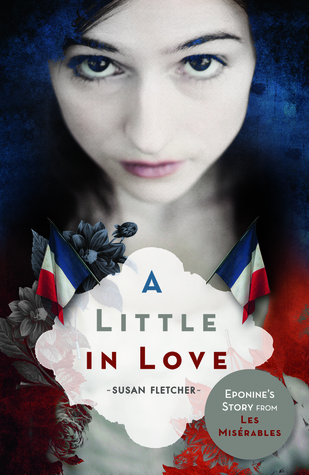
*image via GoodReads

Young Eponine was raised to be a thief. Her mother and father were crooks, and expect her to live up to their malicious and untrustworthy reputation. Eponine knows stealing from is bad, but her family are poor and the pretty trinkets she pinches bring her mother such joy. It’s a dog eat dog world after all. One day another young girl enters her Eponine’s life. She has golden hair and despite the rags her mother places her in she is so so beautiful. Cosette is her name and she is the only person who has ever shown Eponine kindness - even though at times she doesn’t deserve it. 

Sixteen years later and Eponine is no longer a young girl. Her family may have relocated to Paris but they haven’t stopped their criminal ways. She consistently seeks a better life. Her world is full of darkness but she tries to find happiness and goodness in the small things. One her many ‘lights' in a young boy called Marius. Charming, wonderfully handsome and heartbreakingly kind. The only problem with loving him is that he's in love with another girl. A girl with golden hair and who is beautiful inside and out. Cosette.

So what’s my verdict?

I’m gonna be completely honest with you guys here, I totally only picked this up because I’m a huge fan of Les Miserables musical and Eponine is totally my homegirl - and one of my favourite musical theatre characters of all time. 

If, like me, you’re also a fan of Les Mis or the original novel by Victor Hugo, you probably think you know Eponine Thernadier’s story back to front. And yes, the storyline for this novel is familiar and the timelines certainly do match up on many occasions - her ending is also unfortunately still canon *cries*. 

What Fletcher has done with A Little In Love, however, is take that canon story and expand it. As the love-lorn third wheel to the Marius/Cosette love story, Eponine for me is generally one of the more relatable characters from Les Mis. But by delving in her past and backstory, Fletcher presents Eponine as more than just the girl who pined after a boy. Strong-willed, brave and always striving to do good, Fletcher's Eponine deals with the struggle of with being as heartless as her family and her want to become a better version of herself. 

Though we do see a good portion of the story dedicated to her love of Marius (who is just as charmingly clueless of his effect on our ‘Ponine), equal credence is given to Eponine’s fervent quest and determination to be a good force in the world. 

Obviously Eponine is our leading lady in this instance, but there is some nice insight into the Thernadier’s world. Subplots surrounding Eponine’s relationship with her mother are also really interesting, and I do love Eponine’s ongoing contrast to Cosette’s life - something I always found irritating in the musical, but loved how it played out in this novel.

I’m being biased but I personally really enjoyed the book, though other readers will notice that A Little In Love in definitely geared towards a younger audience. However, it’s important to remember before criticising Eponine’s vernacular that she is very much a girl experiencing young love in all forms. She’s a little naive but learns every step of the way, and knowing her ending only makes her story even more heartbreakingly tragic.

Reading Soundtrack:
Songbird: Fleetwood Mac; La Vie En Rose: Edith Piaf; Dreaming With A Broken Heart: John Mayer; Samson: Regina Specktor; Beside You: 5 Seconds of Summer; My Love: Sia; Lights: Jake Nauta; Last Night On Earth: Green Day; Clean: Taylor Swift 

For lovers of...Les Miserables (the musical, film and the Victor Hugo novel), Moulin Rouge, and Never Let Me Go. 
No comments

Friday, 19 September 2014

Guest Review | Longbourn | Jo Baker


'If Elizabeth Bennet had the washing of her own petticoats,' Sarah thought, 'she would be more careful not to tramp through muddy fields.'

It is wash-day for the housemaids at Longbourn House, and Sarah's hands are chapped and raw. Domestic life below stairs, ruled with a tender heart and an iron will by Mrs Hill the housekeeper, is about to be disturbed by the arrival of a new footman, bearing secrets and the scent of the sea.

If you're anything like me (not short and obsessed with frozen yoghurt but a major Jane Austen fan) then you would probably jump to read a novel that has anything to do with Pride and Prejudice, right? This leads me to Longbourn. The events of the book take place alongside the events of Pride and Prejudice which are detailed and experienced s through the characters of the 'downstairs' who also have their own saucy dramas going on! Think Downton Abbey, solely about the help and hearing about Edith and Mary's love lives through them.

I thought initially that I would either love or hate this concept for a book. I thought I might constantly compare it to P and P and it would come up short, because let's face it, most things would. However, I found that when I looked at it as a novel in its own right I thoroughly enjoyed it. Longbourn really captured the working class perfectly and gave me a whole new insight into the era through a completely contrasting different social class.

The most obvious difference was the fact that this is a modern book so Baker goes further with the love scenes and language and on the whole it's more...gritty, which is very reflective and fitting of the class it is representing. Sarah, the lead, is very different to Lizzie but makes for a fascinating narrator in herself. There are some very interesting and varied characters and the appearance of a mystery footman, James and the subsequent love story definitely made for an interesting read. Also since watching Pride and Prejudice I have given more notice to the background characters and it has actually given me more enjoyment of the original.

As well as this Jo Baker's work is very well researched and she has effortlessly integrated the characters without it appearing like she is changing or reimagining the Austen world we love so much! Yet despite this the novel never feels too familiar and the main storylines and characters feel very original and fresh.

Okay, so what's not to like? Well, as a avid fan of Pride and Prejudice, it was hard just getting snippets of the storyline we know and love here and there and it made me want to pick up the other novel instead! As interesting as these original storylines were I didn't find them AS classic as well, the classics and....I missed Darcy, there I said it! There was also a slight addition to Mr Bennett's romantic history that didn't sit too well with me, however I will leave that up to you all to forge your own opinion.

All in all though these are all picky points and as I have already mentioned, if you step back and view this book as a completely separate entity, then it is a very fun, interesting read. Moreover, a film adaption has been commissioned and it's always nice to read the book beforehand, no? I'm already trying to think of which beautiful actors they might cast...am I being shallow? Perhaps... So, if you love a good period drama, some romance and a little mystery then I would definitely, definitely recommend this book!

I would give this three enthusiastic stars!

This post was written by guest blogger Sophia, check out her blog Small & Happy or follow her on Twitter @sophiacristina.

No comments
Island of the Blue Dolphins | Scott O'Dell | Reviewed by Niina

Wednesday, 13 August 2014

Island of the Blue Dolphins | Scott O'Dell | Reviewed by Niina

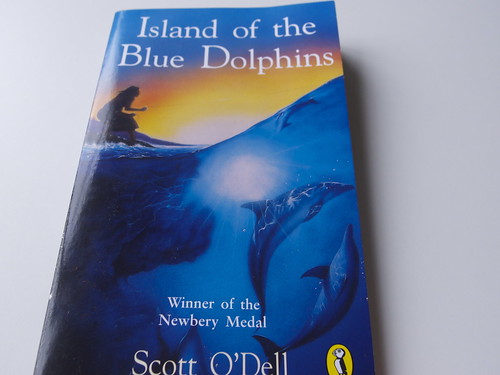
P8125053
“Many of our tribe went to the cliff each night to count the number killed during the day. They counted the dead otter and thought of the beads and other things that each pelt meant. But I never went to the cove and whenever I saw the hunters with their long spears skimming over the water, I was angry, for these animals were my friends. It was fun to see them playing or sunning themselves among the kelp. It more fun than the thought of beads to wear around my neck.” - Scott O'Dell - Island of the Blue Dolphins 

Island of the Blue Dolphins by Scott O'Dell is based on the true story of a girl who gets stranded for 18 years on an island off the California coast in the 19th century. It's the story of Karana, a young girl that accidentally gets left behind when her tribe leaves the island. 

To be honest, there isn't too much happening in this novel. The novel just simply tells the story of Karana's every day life on the island. Fishing, collecting food, building shelter and making weapons to defend herself against the wild dogs that circle her camp during the night. But I have to say that I still truly enjoyed this book. If I had children this is the kind of book I would love to read to them! The novel really portrays the life on the island in a beautiful way, Karana's love and respect for her surroundings and how she befriends many of the animals on the island. One of the wild dogs that she fears in the beginning of the story later becomes her friend and companion and their relationship makes a nice addition to the story (I'm usually not that touchy-feely, but I can't help it, you got to love a beautifully written friendship between a human and a dog). The novel is also really well-written and I can hear that it's Karana's voice that tells us her own story. Sure, the language can sometimes be a bit juvenile, but let's face it, it's a children's book written from a young girls perspective. 

I think this is a beautiful children's novel and it makes me want to live alone on an island for 18 years so I can befriend a wild dog and a few otters. If you have children (probably around the age of 8-11) you need to read the Island of the Blue Dolphins to them, because this is a story that you yourself will enjoy as much as your kids will. If you don't have kids? Don't worry, you can still read it and truly enjoy it! I just wish I would have know about this book when I was a kid, I would have probably given it 5/5 stars. But the 27 years old version of me gives Island of the Blue Dolphins by Scott O'Dell 4/5 stars

This post was written by regular reviewer Niina, get to know her here.


4stars
No comments
TransAtlantic | Colum McCann | Review

Wednesday, 7 May 2014

TransAtlantic | Colum McCann | Review


“A brand-new thought: Transatlantic airmail. She tests the phrase, scratching it out on the paper, over and over, transatlantic, trans atlas, trans antic. The distance finally broken.” - Colum McCann, TransAtlanic

TransAtlantic is a novel with different stories that span over different decades and generations. The stories also take the reader back and forth between Ireland and America. In the end the stories are linked together through different generations and historic events. The first story in the book is the story of Jack Alcock and Teddy Brown, two Irishmen who make the first non-stop flight over the Atlantic in an old warplane.

TransAtlantlic by Colum McCann is a well-written and a well-researched historical novel. I really found myself enjoying McCann’s writing style, it was easy to follow but still colorful and descriptive. The characters and the places in the story were very vividly and nicely portrayed.But the problem with reading novels with different overlapping stories is that you as might not enjoyed the stories equally as much. For example, I wasn’t that impressed with the story of Alcock’s and Brown’s flight over the Atlantic or the story of George Mitchell, former senator who played a big part in the Irish peace process. I didn’t quite feel like George Mitchell was a natural part of the story in the same way as the other characters. But on the other hand I really enjoyed the story of Fredrick Douglass, former slave, now activist and writer who visits Ireland during the days of the Great Famine. I also really liked the story about Lily Duggan, an Irish maid that Fredrick Douglass encounters during his time in Ireland and who moves to America to start a new life.

Even if I had mixed feelings about the different stories in this book I still found it to be a really enjoyable reading experience. If I had enjoyed the different stories equally as much TransAtlantic would easily be a 4-star book for me, but because I struggled with getting through a few chapters I’ll leave my rating at 3,5/5 stars. But if you like historical fiction or are interested in Irish history I definitely think you should give this book a go! I’m pretty sure you’ll enjoy it.

This post was written by regular reviewer Niina, get to know her here.
1 comment
Z: A Novel of Zelda Fitzgerald | Therese Anne Fowler | Review

Wednesday, 2 April 2014

Z: A Novel of Zelda Fitzgerald | Therese Anne Fowler | Review

*image via GoodReads

“Marry me, Zelda. We'll make it all up as we go. What do you say?”

Growing up in Montgomery, Alabama, Zelda Sayre was destined to grow old as a Southern Belle debutante, married off to a well-to-do man who would expect her to hold down their household. 
Barely out of school she happens to meet handsome, young Lieutenant Fitzgerald, who sweeps her off her feet with poetic phrases and promises of a glittering life as the wife of a soon-to-be legendary author. After a brief break in their engagement, the two eventually wed and set off into the sunset to live their happily ever after. 

If this was a fully fictionalised book this would've been the end to their story, but ‘Z’ follows the Fitzgerald’s lives through Zelda’s eyes as they navigate their way through the early roaring 20’s and the jazz age, during which Zelda was dubbed ‘the world’s first Flapper’, and lived in seemingly wedded bliss. 

The novel also follows their strained relationship as they travelled through Europe and America, dealing with jealousy, the birth of their daughter Scottie, chronic alcoholism and depression in a world that begs them to join the excess and partying that ultimately leads to their downfall.

So what’s my verdict?

Going into this book and knowing nothing of the Fitzgerald’s lives, I was intrigued by everything that happened in this story. In a world that focuses so much on celebrating the literary genius of F Scott Fitzgerald, Zelda is often left towards the sidelines as the ‘first flapper’ or ‘crazy wife’. ‘Z’ does portray her as both, but there is a depth to her character that is deeply rooted in her – later diagnosed – bipolar disorder. 

This book is just as much about her relationship with Scott as it is about her and her struggles. We see her deal with his rising and falling literary career, his lapses in his alcoholism and the strain of their marriage. At times it did feel like I was reading a train wreck ready to happen, and it is true that the two Fitzgerald’s perfect bubble of a life burst eventually, but I had to keep reminding myself this is a dramatisation of reality. 

There was also a point, mid-novel, when the story seemed to slow down into a repetitive cycle of Zelda or Scott screwing up the relationship, then magically making it up to each other with no resolve. One lasting conflict I did, however, enjoy was Zelda’s tense relationship with Ernest Hemingway, and her paranoia that Hemingway was attempting to prise Scott away from her. 

Overall the writing is fairly poetic, to fit with the dramatisation, and it did feel like Fowler transported you back to that time period. However, it’s in Zelda’s voice that Fowler really shone as she captured both the euphoria of young love and heartbreak of Zelda’s conflicted mind. 

Though at times she may seem so, Zelda is not a tragic character. She’s was a woman who was, perhaps, ahead of her time. Damaged and broken, but pushing for independence, had she lived in another age she may have thrived, but would she have had the same mystique that surrounded her as ‘muse of F. Scott Fitzgerald’? Who knows?

Reading Soundtrack:

Starring Role: Marina & the Diamonds; Love Is Blindness: Jack White; New York City Heat: Dead Heart Bloom; Temporary Bliss: The Cab; Why'd You Only Call Me When Your High: The Arctic Monkeys; The Bad In Each Other: Feist; Sky: Joshua Radin

For lovers of

The Great Gatsby, The Bell Jar (Sylvia Plath) & Next To Normal

This post was written by regular reviewer Ria, get to know her here.
1 comment
Life Below Satirs: In the Victorian & Edwardian Country House | Sian Evans | Review

Wednesday, 9 October 2013

Life Below Satirs: In the Victorian & Edwardian Country House | Sian Evans | Review


Life Below Stairs by Sian Evans is a non-fictional book about the life of the servants in the Victorian and Edwardian country houses. I have to admit that the only reason I picked it up was because I’m a Downton Abbey fan. I really enjoy watching Downton Abbey and felt like I wanted to learn more about the servants and their working conditions.

Life Below Stairs is a very informative book and I feel like it covers most parts of the life of servants in the Victorian and Edwardian country houses. You can read about the different jobs and hierarchies between servants, about special occasions in the houses and the servant’s relationships with their employers. You can also read about the different rooms in the country houses and their different uses during the Victorian and Edwardian area. The book is also filled with a lot of pictures and photographs. The pictures consist of both old photographs and new photographs taken in the country houses of the Victorian and Edwardian era.

Life Below Stairs is an easy and informative read. I felt like I learned a lot of new things while the experience was easy and pretty effortless. Every different chapter is pretty short and the text is always combined with a lot of pictures. That being said I still feel like the book was filled with a lot of information. I think that this book suits both people who are total beginners and people who already have some knowledge in the subject because despite all the pictures and the short chapters this book is filled with a lot of information. There are also a lot of stories and examples from real country houses from the era. But I have to say that there was one thing that made the reading experience a bit slower and more confusing then necessary and it was all the name-dropping. Every chapter was filled with examples from different country houses and people. There were a lot of names and I had a pretty hard time remembering the names and keeping them apart. It kind of felt like the author thought that everyone reading the book would already know the names every lord, lady or servant from the Victorian and Edwardian era in Great Britain. I don’t know about you but I don’t know my lords and ladies and all that name-dropping made me a bit confused.

I always think that it’s really hard to rate non-fiction books because in the end it’s mostly about your individual interests. If you read a non-fiction book about something you’re really interested in you’re probably going to enjoy it (even if there’s obviously good and bad examples of books about the same subject, but I think you get the point). So, I’m not going to rate Life Below Stairs by using the stars I usually give out. I’m just going to say that if you’re a fan of Downton Abbey and want to learn more about the life of the servants (or are interested in the subject for some another reason) I think you’re going to enjoy reading this book. I also think that you’re going to learn some new interesting things about life in the Victorian and Edwardian era. Even if all the name-dropping annoyed me a bit I still think this book was worth reading and I liked how informative yet effortless it was.

This post was written by regular reviewer Niina, get to know her here.
No comments
Code Name Verity | Elizabeth Wein | Review

Wednesday, 4 September 2013

Code Name Verity | Elizabeth Wein | Review

Code Name Verity header
*image via GoodReads

“I have two weeks. You’ll shoot me at the end no matter what I do.”

Our story starts in 1943 in an abandoned hotel in Nazi occupied France, where Queenie, a British spy, has been captured and tortured by the Gestapo. Her captors soon convince her to become a collaborator and she has been allowed to write down the events that led to her capture in the hope she will divulge some secrets about the British War Effort. 

But Queenie isn’t giving up her information that simply. She’s going to tell her story, but her story starts back home in England with her best friend Maddie. Fearless, flying Maddie who was the pilot who flew her to France in the first place.

The written account Queenie provides her Nazi captors is as much Maddie’s story as it is her own and actually start with Maddie’s upbringing and ambitions to one day fly aeroplanes. Queenie herself is not introduced as a character in Maddie’s story until much later, with the two of them meeting whilst serving together in the WAAF (Women’s Auxiliary Air Force). The two young girls are from completely different worlds (Queen is a from a Scottish legacy, Maddie country girl brought up by her Jewish grandparents) and if it weren’t for World War II, they may have never met. 

As well as detailing bits and pieces of the war effort to appease her captors, the account Queenie provides ends up becoming so much more than a forced confession but an incredible account of two best friends who make a sensational team.

So what’s my verdict?

I started Code Name Verity pre-LeakyCon and actually got to meet Elizabeth Wein at the convention. At the time I confessed to her that I’m not a huge fan of historical fiction – quite daring of me I know! – but I was enjoying what I read of her book so far. She urged me to go on and that if there was a book to get me into the genre she hoped this would be it. Luckily for her, she was definitely right about that.

For me it did start a little slow – though this may have been the large break I had in the middle of reading the book – but once I fully immersed myself into the story I found myself stuck into a brilliantly written and heartfelt story of two wonderfully brave young women. Queenie, our main narrator, clearly admires Maddie and her confidence not only as a person but as a skilled pilot. But Queenie is also an astonishing woman in her own right, her talents lie in deception and her language skills in French and German prove to be more than useful to the Special Operations division of the military.

Unlike most fiction in this genre, the historical details provide a seamless backdrop to the main chatacter’s journey. The technicalities are there with types of planes, the airfields and dated slang but slotted in easily within the story and aren’t forced upon the reader.

Though Maddie and Queenie are obviously our main protagonists, the book plays host to plenty of others both allies and enemies. The most interesting characters for me were Queenie’s captors themselves. Though morally corrupt at face value, with Queenie living under their thumb for the majority of the book Wein does manage to give those in the Gestapo stronghold a voice too, with surprising effects.

Overall, I’d completely recommend Code Name Verity. The story is captivating and the ending with leave you heartbroken. It's great to read story set in this era with two strong female protagonists, who are both heroes in their own right. 

Reading Soundtrack:

Part Of Me: Katy Perry; Night & Day: Sarah Blasko; This Is The Thing: Fink; Night Terror: Laura Marling; There You'll Be: Faith Hill; Soldier On: The Temper Trap


For lovers of:

The Book Thief, Carrie's War, other WWII historical fiction and kick-ass female characters.
No comments
Briar Rose | Jane Yolen | Review

Monday, 22 July 2013

Briar Rose | Jane Yolen | Review

Briar-Rose-cover
“Once upon a time…” Becca and her sisters grew up hearing the story of Sleeping Beauty from their beloved Grandmother Gemma. On face value it feels like the original fairytale but it’s not the traditional story with a happy ending. Gemma’s version ‘Briar Rose’ was indeed the beautiful princess who was placed under a sleeping curse along with the rest of the inhabitants of her castle, but this princess was red headed – like Becca’s own Grandmother – and when the prince comes to save the day, the only person to wake from their slumber is Briar Rose. It was an unusual and at times scary story for the young girls but a tale that they made Gemma tell over and over again. 

Now a young woman, Becca still remembers the tale and as her ailing Grandmother Gemma is lying on her deathbed she makes a remarkable confession. Gemma is the princess who awoke from her slumber and her last wish is for Becca to find the castle and the prince from what she thought was just a fairytale.

With only a single mismatched box of Gemma’s belongings to guide her, Becca embarks on a fairytale-like quest of her own into her family’s history. Her search for the truth isn’t the easiest when she finds out that Gemma may have lied about her whole past and even her name. Becca has a breakthrough, which takes her away from her life in America to Poland to follow tale that spans back in time to the Second World War and the horrors of the Holocaust. 

So what’s my verdict?

This book was not what I expected. What starts out as a girl trying to find out whether a fairytale can really exist in this world turns into a moving journey into her Grandmother’s life before she immigrated to America. Telling the finer details of this story would reveal major plot points, but as I mentioned in my summary the story takes Becca away from the fantastical elements of the Sleeping Beauty story and replaces it with something much more haunting. The truth in the tale, told in a separate story within the book, is more disturbing than Becca can imagine and even more to so for the reader when you realise there were many stories just like it during the midst of World War II.

It’s not so much Becca’s story (though her journey does lead her to question everything she knew about her own life and childhood) but that of Gemma herself. Peppered with flashbacks to Becca’s past, when Gemma would be retelling the story to her young granddaughter, Gemma’s presence is felt throughout. Briar Rose is essentially historical fiction at it’s darkest; nevertheless it’s a poignant story that will leave you realising why Gemma chose to remember the fairytale than the truth. 

Reading Soundtrack: 

The Woods: Daughter; Young & Beautiful: Lana Del Ray; Fix You: Coldplay; Poison & Wine: The Civil Wars; Hospital Beds: Florence + The Machine; Human: Charlene Kaye 

For lovers of

The Boy in the Striped Pyjamas, Schindler’s List and The Diary of Anne Frank.

Image (c)Ria Cagampang
2 comments

Sunday, 21 July 2013

The Book Thief | Markus Zusak | Review


Liesel Meminger stands in the cold winter of Nazi Germany in 1939. She watches as her brother is buried in the snow. As she stands beside her brother's grave she sees a book lying among the snow left by accident. This book is the first of her book thefts. Shortly after this, she is sent to live with the Hubermann's and the book takes us through her life there and we see how she becomes The Book Thief. And when a Jew lives in their basement, things get only more complicated. Looking through Death's eyes, we see the hardship of the Second World War and the effects it has in this German town.

The Book Thief is brilliant. Truly and utterly brilliant.I first read it when I was thirteen or fourteen. From the first page, I was thinking of things that I never really considered before. For instance, the colour of the sky, the afterlife the list went on and on as I continued to read. I love Liesel as a character. At a time when books were really rare to come across, it shows her determination to read anything and how she gets to a point where she needs to steal these books. Liesel's foster father is also a brilliant character. He is a brilliant and kind man who teaches Liesel how to read. I would recommend towards the end though that you get some tissues to hand because trust me, you will need them!


As I was reading, I thought to myself: It's hard to believe that these situations actually happened once. The majority of people in those days simply did not know how to read. They couldn't get books as easily as we now can. Nowadays, getting access to books is so easy, with libraries and online shopping and bookshops! For people who love reading (i.e all of you reading this), it is hard to imagine a world without our beloved books.

The Book Thief was brilliantly written by Markus Zuzak and I found his writing style easy to read and I finished this book within the week I had bought it. Since the first time I read it, I have read it a second time and plan to read it again this year because it's a story I love returning to.

I just found out that this book is going to be made into a movie. I am uncertain of release dates but as you can surely tell, I am really excited!

Obviously this is a five star book in my opinion. I would love to hear what you thought of it, if you're going to read it and what not. It's a historical fiction, teen, sort of book but with lots of amazing things in it. So really I would recommend it to anyone! 

This book was reviewed by regular reviewer Lucy, get to know more about her here!
Photos from Lucy Donnan
3 comments

Sunday, 2 June 2013

Carter Beats the Devil | Glen David Gold | Review


Carter Beats the Devil, by Glen David Gold, was one that was recommended to me by a work colleague. She described the book to me and a bit about the characters, and I knew I had to read it. Rather than just getting it from the library, I bought it. I don’t normally just buy books based on other people’s opinions, but I think I had a ‘ah, what the heck’ moment and just went for it. I’m so glad I did. This one will be one I re-read at some point, for sure.

Set in the early 1900s, Carter Beats the Devil tells the story of Charles Carter, a magician, and his journey through the ups and downs of trying to make it in the magic business. I found that there were two sort of key events in the book.  The book starts off at a similar time to when it finishes, and then jumps way back in time and continues from there. If that makes sense... The first chapter tells the reader two things: 1) Carter has bet the devil in his final performance of the night and 2) the President was found dead, just hours after seeing Charles Carter’s show.

After these key points are established and the questions are raised (did Carter kill the President? How does he beat the devil? etc), the story splits into sections. Some chapters are from Carter’s perspective; some are from that of the detective investigating the President’s death. The language used is very fun to read, and though it’s long, the words used and the descriptions of things are such that it doesn't really feel as long as it actually is. That probably doesn't make sense…just go with it.

With mysteries and questions, a lion called Baby, a disappearing elephant, a skeptical brother, a woman called Sarah, and a whole lot of magic, Carter Beats the Devil is great read. The characters were fun – and some, of course, were horrible – and there was a good amount of humour as well as the serious stuff. There were a few chapters near the beginning that I didn't think were all that necessary – details about Carter’s life when he was very small, that I didn't really seem to link with the future/present Carter – but overall it was very clever, captivating and extremely well thought out.

I think I will definitely be paying attention to more of the books my colleague suggests in the future.

Image from Goodreads

No comments
© Blogger's Bookshelf • Theme by Maira G.