SLIDER

WELCOME TO BLOGGER'S BOOKSHELF...


where our team of writers love to talk all things books, sharing reviews, features, lists, interviews and more.

Getting lost in a book is escapism at it's finest and it's what everyone who contributes here thrives on.

NEWSLETTER

Discussion
Showing posts with label Discussion. Show all posts

Saturday, 7 April 2018

Clean | Juno Dawson | Discussion

*Review copies c/o Netgalley

I can feel it swimming through my veins like glitter ... it's liquid gold.

When socialite Lexi Volkov almost overdoses, she thinks she's hit rock bottom. She's wrong. Rock bottom is when she's forced into an exclusive rehab facility. From there, the only way is up for Lexi and her fellow inmates, including the mysterious Brady. As she faces her demons, Lexi realises love is the most powerful drug of all. It's a dirty business getting clean...  - Goodreads


What made you want to read Clean?

Erin: I've really enjoyed many of the author's other YA novels so I'm always excited to hear what her next new release will be. Honestly, I'm not sure whether I would have picked up a copy of Clean based on the premise alone, but I enjoy reading Juno's work and love the way she is always able to create such memorable characters, so when I saw the book pop up on Netgalley I couldn't resist!

Ria: I adore Juno's writing and have really enjoyed her previous novels, so I'm always looking out for her next release! It also helps that the premise and tone of Clean was pitched as a cross between Gossip Girl and Girl Interrupted - both films/books I love too.

What did you think about the characters? Did they feel realistic?

Erin: I loved that there was a diverse range of characters in the book, each with dealing different issues. At first, our main character Lexi felt very unlikable and unrelatable but I still found her to be an interesting guide through this particular journey and enjoyed seeing her growth over the course of the novel.

Ria: The characters in Clean definitely feel larger than life and yet there are little snippets of their personalities that do feel very much human. They all have flaws, they all make mistakes, and none of them are perfect, and I kind of love them all for it. Lexi, in particular, is obviously the living embodiment of this. There are so many moments where she is frustratingly dislikable, but she's young and she's learning.

What was your favourite thing about the book? And was there anything you didn't like?

Erin: As I've already mentioned, I liked that there was a diverse cast of characters and I also thought the opening scene of the novel was very intriguing. If I'm being completely honest I wasn't crazy about the ending, or the romance element in general, but this didn't take away from the way Juno explored such interesting yet tough topics and I love that she wasn't afraid to tackle these.

Ria: I really enjoyed how diverse the book felt without it being too forced. It as great to see such a range of different issues explored, as well as the inherent messiness of recovery and therapy. As always Dawson's humour and writing style is fantastic, she always manages to capture this age of character so well. Like Erin, I wasn't so keen on the ending but seeing Lexi's character grow and change throughout the novel was really satisfying.

Would you recommend this book?

Erin: Whilst I think most fans of Juno's work will enjoy Clean, it won't be to everyone's taste. The book and Lexi's story feel very raw and intense, so at times it can be a difficult read but it tackles some really important topics. Personally I found it to be an interesting read overall and as always I look forward to seeing what Juno will come up with next!

Ria: Yes! Whilst it may not be for everyone, I do think the stories within Clean are really important and it's rare to see a YA novel explore these issues in such an unfiltered way.


Follow
No comments

Monday, 12 March 2018

Scythe | Neal Shusterman | Discussion

scythe neal shusterman review blogger's bookshelf
Thou shalt kill.

A world with no hunger, no disease, no war, no misery. Humanity has conquered all those things, and has even conquered death. Now scythes are the only ones who can end life—and they are commanded to do so, in order to keep the size of the population under control.

Citra and Rowan are chosen to apprentice to a scythe—a role that neither wants. These teens must master the “art” of taking life, knowing that the consequence of failure could mean losing their own. - Goodreads 

First things first, what made you decide to pick up Scythe?


Anjali: I’ve only read Unwind by Neal Shusterman, but when I saw this book was coming out I knew I really wanted to read it. The themes and the ideas in the story really interested me, and it did not fail to live up the hype I had read around it either.

Erin: If you've read our Meet The Team bios you may already know that Neal Shusterman's Unwind series is one of my all-time favourites (I've also enjoyed a couple of his other books too!). I love his writing style and enjoy that he often tackles topics and themes that really make the reader think. The blurb for Scythe was super intriguing with a unique utopian concept so I automatically added it to my TBR.


Were there any characters you wanted to get to know better or that you hope to learn more about in the sequel?


Anjali: While we did get a little bit of Scythe Faraday’s story towards the end of the book, I’d like to know more about his past. I’d also be super keen to read about another junior Scythe who is a little older than Citra and Rowan, and what their experiences were like, looking back a few years on.

Erin: The character I found the most interesting was Scythe Faraday and in the sequel I would love to hear more about his story as well as Scythe Curie's. In the first book we learn that they are both well-known scythes and have been alive for a very long time so I think they must have a lot of fascinating stories to tell. If we don't get to explore their past lives further in Thunderhead, I think they could possibly make great companion novellas to the series.


Hypothetically, if this were to happen in real life, do you think the Scythedom would be a feasible solution?


Anjali: Stepping back from the story, and just looking at the idea of conquering death and how you’d deal with that as a society, hypothetically, I don’t think there would be a solution, feasible or not.

Even if rules or regulations like the Scythedom (people being selected for death to avoid overpopulation), or stopping people having kids, or capping the amount of times that people can ‘turn the corner’ to go back to a younger age, there would always be problems. Someone would get upset, someone would want to change the system, someone would think they could do it better. Humans, as great as we might think we are, are flawed. We’re incredible, complex beings, but we are flawed. Our birth and death are the bookends of our life, and without the stopper of death at the end of the shelf all the books fall off and create a big mess. Such would it be with ‘conquering’ death; a big mess, unlikely to have any real solutions.

Erin: The simple answer to this question is no. There are so many reasons - including some of those that Anjali has shared her thoughts on - why a Scythedom wouldn't work as a solution. I can't really ever see an idea like this being successful but as with any basis for a utopian world, even if there was a chance the concept worked for a length of time it certainly wouldn't be a feasible long-term solution.


Do you have a favourite quote from the book?


Anjali: There were many fantastic quotes throughout Scythe, but this is up there in the top 5:

“Hope in the shadow of fear is the world's most powerful motivator.”

Erin: If I had been able to get my highlighters on this book the pages would have been full of colour, but sadly I didn't think the library would appreciate my annotation! I also forgot to keep track of any quotes that stood out as I read because I was enjoying the book so much. I think I'll have to add a copy to my collection and re-read it, highlighters in hand, in the future.


Any final thoughts on Scythe?


Anjali: I loved this book. A lot. Few books I’ve read these days have really got me thinking, and, if my answer to question 3 is anything to go by (and I did chop it down to this paragraph!), Scythe really did. There were so many hints and nods to things in real life throughout the book, and of course, the whole concept of ‘conquering’ death that made me stop and think multiple times throughout the story. I really also enjoy Shusterman’s storytelling, and the characters he creates. Really looking forward to picking up Thunderhead. Would definitely recommend. 5 stars.

Erin: I found the whole concept of Scythe so interesting and thought-provoking which made the novel such an enjoyable read. Seeing how varied the scythes attitudes towards their job were was a particularly interesting aspect and I felt the diary entry snippets included throughout were a great addition to the story. Similarly to Anjali, I also rated the book five stars and can't wait to read the sequel!


Follow
No comments
Mini Collab | Top 5 Must-Read YA Dystopian Series

Tuesday, 10 March 2015

Mini Collab | Top 5 Must-Read YA Dystopian Series

must read ya christina

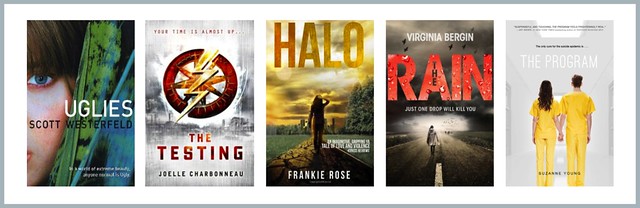
Christina's Top 5: 

1. Uglies by Scott Westerfeld – my all-time favourite dystopian series (although I’ve only read the first two and half of the third) about a world in which cosmetic surgery is forced upon every teenagers’ life as they reach their sixteenth birthday. It’s an oldie, but a goodie!

2. The Rain by Virginia Bergin – a great dystopian duology about Ruby, a young teen who must learn to survive after the world discovers the rain is poisonous and one drop can kill you.

3. The Testing by Joelle Charbonneau – one of the first dystopian books I read, this series is similar to Hunger Games but with a different twist.

4. The Program by Suzanne Young – a dystopian duology about a society in which suicide is an epidemic and The Program has been created to erase the minds of the “infected.”

5. Halo by Frankie Rose – again, another I’ve only read the first book in the series but this is one of the best books I’ve ever read. A dystopian book where the main character runs away from her town after killing her best friend in an organised fight to the death and must learn to survive outside of everything she has ever known.

must read ya erin

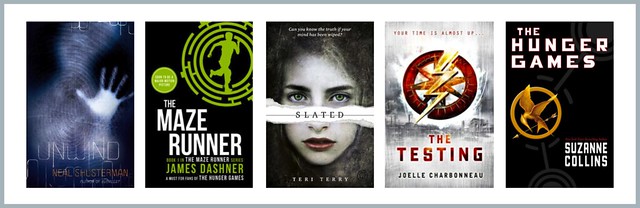
Erin's Top 5:

1. Unwind by Neil Shusterman - often overlooked this four book series has a very intriguing concept. Taking place in a world where parents can choose to have the teenagers 'unwound', a process where all of their organs are transplanted into different recipients, the series explores what is it to be human.

2. The Hunger Games by Suzanne Collins - I couldn't make a top YA dystopian list without including one of the most well-known series and the first one of the genre I read!

3. The Maze Runner by James Dashner - another popular series this trilogy follows groups of teens through various 'trials' in a future version of the world where a disease called the Flare has wiped out most of the population.

4. The Testing by Joelle Charbonneau - this well-paced series follows Cia who is chosen to attend the prestigious University in a time where the current students will become the future leaders of this post-war world. With plenty of action and a few little twists along the way this series is a great read for fans of the genre.

5. Slated by Teri Terry - this UK-based trilogy is one of the more believable dystopian setups and effortlessly takes you alongside protagonist Kyla on her complicated journey after she has been 'slated' meaning her memories have been erased.

must read ya anjali

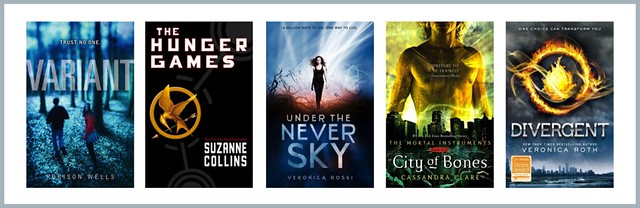
Anjali's Top 5:

1. Mortal Instruments by Cassandra Clare - one of my favourite fantasy series for teens and young adults. I love the story line, and the characters and yes, the books are better than the movie.

2. Divergent Series by Veronica Roth - in terms of dystopian series, Roth's books are at the top of that list for me. I read them in the space of about 2-3 days, and loved them. Having said that, I still haven't seen the movie.

3. Under the Never Sky by Veronica Rossi
- another great dystopian YA series, which I don't think gets enough credit. I really want to re-read these this year.

4. The Hunger Games by Suzanne Collins - it may be an obvious choice, but the books are just really great!

5. Variant by Robison Wells - while this series is only two books long, I was immediately hooked on the first pages of Variant, and couldn't stop reading. A great couple of books that will keep you on the edge of your seat. The whole time.

Which series would make your list?

This post was written by Christina, Anjali & Erin. Get to know them on our Meet The Team page!
2 comments
Mind Games | Teri Terry | Discussion by Christina & Erin

Wednesday, 28 January 2015

Mind Games | Teri Terry | Discussion by Christina & Erin

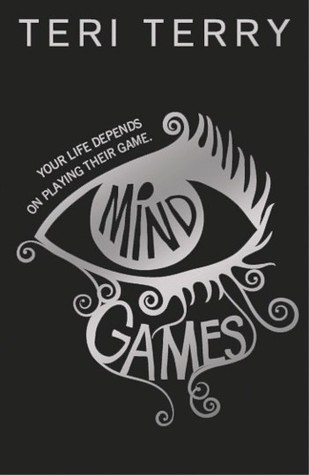
*Review copies c/o Netgalley, image c/o Goodreads

mind games teri terry 2015

"Luna is a no-hoper with a secret: in a world of illusion, she can see what is real. But can she see the truth before it is too late?

Luna has always been able to exist in virtual and real worlds at the same time, a secret she is warned to keep. She hides her ability by being a Refuser: excluded by choice from the virtual spheres others inhabit. But when she is singled out for testing, she can’t hide any longer.

The safest thing to do would be to fail, to go back to a dead-end life, no future. But Luna is starting to hope for something better, and hope is a dangerous thing...
" - via Goodreads


With so many YA dystopian novels out there at the moment, how did this one stand out to you & make you decide to read it?

Christina: The advanced technology was a big draw for me, as I like to see how different authors tackle a well-established theme such as that one. A big part of the synopsis is the idea of illusions and things not being as they seem. I love this concept in any story as I enjoy being deceived and misled by books - this aspect drew me in and made me really want to read the book.

Erin: Initially the book caught my eye due to it's author Teri Terry who's Slated trilogy I had read and really enjoyed. I loved how unique, refreshing and realistic the world she had created felt so when I saw that she was releasing another YA dystopian novel I was keen to pick it up!

The idea of virtual reality has been explored in literature before. What unique points do you think Mind Games has that make it stand out from other books with a similar theme?

Christina: I don’t actually think I’ve read any books with a virtual reality, so it’s quite a difficult question for me (If I have, I can’t think of any right now). I do feel as though the advanced technology was realistic and I could imagine living this life myself in the not-so-distant future. The main character made the book stand out for me, Luna being a Refuser was an interesting aspect that I wouldn’t necessarily have expected based on her personality and the society around her.

Erin: The technology and ideas explored in Mind Games didn't feel far-fetched but instead were believable, and without giving too much away also had somewhat of a horror element - it's definitely scary to think these types of virtual worlds could become reality in the near future! I really enjoyed the fact that the main character Luna was a Refuser as it meant we got to see both her real 'in person' life as well as what went on whilst she was 'plugged in' to the virtual world.

Do you feel the characters were realistic or unrealistic for the world in which they live in? 

Christina: I think all of the characters were fairly realistic. The main character being a Refuser was a large part of the storyline, but when everybody around her uses this advanced technology, what are the chances of her refusing? I found this an interesting aspect to the story, as mentioned above, but I'm not sure how realistic this was in terms of the world she was living in. I also felt as though Gecko’s paranoia made his character realistic especially as I got to know more and more about the world the characters were living in.

Erin: At first it was a little difficult to believe that Luna would be a Refuser since her family, friends, and what seemed like the majority of the population had been given the implant and adopted the virtual world into their everyday lives. Having said that I found her pretty realistic throughout the novel as she questioned a lot of what was going on and really took the reader on her journey of discovery alongside her.

How did you find the writing style? Were there any areas you thought were particularly strong or weak?

Christina: Mind Games is the first book I’ve read by Teri Terry and it’s fairly safe to say it won’t be the last. Her writing style really captivated me and drew me in and that’s one of the reasons I loved this book so much. I thought her world-building skills were incredible, with world-building being an imperative aspect of Dystopian fiction I felt she just did this really really well.

Erin: Personally I really enjoyed the writing style which I found very easy to follow and felt that the world-building in particular was strong. Having also read the Slated trilogy I believe that Teri Terry has a talent for creating more believable dystopian worlds allowing the reader not to be pulled out of the story by too many plot holes or questions. (Side note: I loved that the world of the Slated trilogy was referenced within Mind Games!).

What were your overall thoughts on the book? Would you recommend it?

Christina: I actually gave this book 5 out of 5 stars, I loved it. My ratings are often decided on a gut instinct reaction and if I give a book five stars, it’s because it has gripped me and I can’t stop thinking about it. Which is exactly how I felt about this book. I found Luna’s constant questioning of everything around her and her abilities quite annoying, but that was the only slightly negative comment I have for this book. I don’t think Terry has any plans to turn this book into a series, but I’m really hoping she does.

Erin: Similarly to Slated I gave Mind Games a 4/5 stars based on the concept, world-building, writing style and my overall enjoyment of this futuristic novel. I'd definitely recommend the book in general but particularly to those who loved the Slated trilogy!


Mind Games is due for release on March 5th!

This post was written by regular reviewers Christina and Erin. Get to know them here!
No comments

Friday, 14 June 2013

All Over the Place | Serena Clarke | Discussion from Laura and Anjali


How (if at all) did the plot surprise you, or stand out to you?

Anjali:
When we were approached to review All Over the Place, I was hesitant to say yes because I thought I couldn’t really give much input, as I don’t really read chick-lit. But at the same time, I was drawn to it and really wanted to read it because it pretty much sounded like my life (except the whole mysterious man on a train thing…or the having to flee the country in embarrassment thing…or…). I don’t actually read a lot of chick-lit, but I do watch a lot of chick-flicks, so that’s what I had to go on when I read this story. I really liked the story line, and though it was an almost ‘typical’ chick-flick-lit (a phrase I’m positive is going to catch on…) with a love triangle and ‘argh, who should I choose!?’ type of vibe to it, it was atypical in that it incorporated elements like a TV show in New Zealand, a bunch of dead rock stars, a hair salon in London and a mother on the look out for someone new. I guess the random elements like that surprised me (in a good way) and the whole plot stood out to me because Livi has connections with New Zealand, and England…much like I do…I think I just need to ride the subway more to find me a handsome man…

Laura:
This is tough to answer without giving too much away! Yes and no. I will simply say that I was rooting for one person and they didn’t win. However that did not surprise me as if you read between the lines a little, the clues were there.

Did you find the characters realistic, and if so, how?

Laura:
In a word, yes. I especially loved the main character in this story and I think that it mainly due to the events which occurred prior to the start of the story. Livi has taken some knocks, she’s had troubles and most of it has been in the limelight, however she’s got back up and battled on. Other characters in the book are also relatable and I almost felt like I could spot the different personalities of my own friends being represented through various characters.

Anjali:
I found that there were a lot of characters, but even so, I thought that Clarke did a good job at writing them so, even if they were just a face in a sea of other faces, they still had their own personalities and their own way of being. One or two of the characters made me think ‘really?’ on occasion, but perhaps it’s because I haven’t really met anyone like them in real life to know if they are realistic or not…if that makes sense. At the same time, I found myself often thinking ‘that’s what I would have said!’ or ‘yup. I would have done the same thing!’, so overall, I think the characters were pretty life-like from the way their mannerisms are describe, the things they said and the way their personalities came through.

How did you find the writing style? Do you think it fits in well with the chick-lit genre in general? Why?

Anjali:
All Over the Place is written in first person, and it’s done in such as way that is very easy to read and very…flowy, for want of a better word. I never used to like first person novels, but over the years I’ve grown used to them and now even enjoy it. I don’t think this book would have worked very well if it were told from any other perspective. I can’t really comment on how it compares or fits in to the chick-lit genre (or even romance genre), but as an ‘outsider’ to these types of stories, I can tell you that it was great to be able to just sit down and read, knowing I didn’t have to think too hard, or get my head around big confusing words.

Laura:
I read this book over around about 5 days, and although I enjoyed the book I don’t think that, that was the only reason I sped through it. The writing style can have a big impact of whether I connect with a book. I found this one very easy and quite relaxing to read, it didn’t challenge me and it didn’t matter if I was tired and not giving it 100% focus because the words flowed in such an easy style. That is one of the reasons I love the chic-lit genre, it’s easy to read and therefore I do think that this book fitted in well, a mixture of its writing style, characters and plot all suited this genre well.

Was there any aspect of the story, or perhaps a character, that you felt was missing from the story? Why?

Laura:
I don’t think there was anything missing as far as plot was concerned. If I could pick anything, I’d say I wish I could of got to know Cam (Livi’s best friend) as character a little bit more although I do understand that, that is a little tricky when the story is based in London and Cam’s character lives in New Zealand.

Anjali:
I’ve been thinking about this for a while, and it appears to be a bit hard for me to think of much. Perhaps it’s because I’m not that familiar with what usually goes in a chick-lit/romance type book. But perhaps the fact that I’m struggling to find anything, means there isn’t anything that was missing. Having said that, in the vast list of characters, there were a few people missing – a supportive already-married couple, a baby, any children at all…We all know these people in our lives, so I wonder why Livi didn’t? But perhaps I’m just being silly, and they weren’t actually needed at all.

What is your over all verdict? Why?

Anjali:
As I’ve mentioned, I don’t read a lot of chick-lit, I’m more of a fantasy/adventure type girl. Because of this, I don’t have many books (other than, perhaps, Jane Austen) to compare All Over the Place to. But I really did enjoy the story. It was a good length, and it was fun and quirky with just the right amount of ‘ooo! What’s going to happen next?’ to make it a fast paced book that was easily a ‘just one more chapter’ story. I’ve given it four stars, and would recommend it to people who like a bit or romance and chick-lit in their lives. Even those of you who don’t really read chick-lit or romance – it was nice to read something completely different for once and you should give it a go.

Laura:
I did really enjoy All Over the Place; I would not have read a book in 5 days if I didn’t have a connection with it. I enjoyed reading about the characters and going on Livi’s journey with her. I would definitely recommend this to other chic-lit lovers, as it fills the category perfectly and I imagine most readers will instantly adore Livi.


All Over the Place was sent to Laura and Anjali by the author for review. However, both their opinions have not been influenced and are 100% their own. A big thanks to Serena Clarke for allowing us to review your book!

This was reviewed by regular reveiwers Larua and Anjali. Get to know them here.
Book description and cover from Goodreads.
No comments
Discussion | NaNoWriMo 2012 Experiences

Saturday, 15 December 2012

Discussion | NaNoWriMo 2012 Experiences

Nano 2012 header

We're all book lovers here at Blogger's Bookshelf but did you know some of us are also writers too? 


This November writers, both amateur and professional, gather round on November 1st and aim to write a novel of at least 50,000 words by midnight on the 30th November, all for National Novel Writing Month - also lovingly called NaNoWriMo.

The types of novels written reach every single genre, they can be deadly serious books - ready to be edited into professional manuscripts - or utterly silly stories, people even write fanfiction. And the novel can be written on anything too...notebooks, iPads, napkins, emails, in blood - well maybe not in blood... - as long as you can tot up your word count at the end of the day it doesn't matter.

So why do people choose to do a challenge like this? Well, we'll let some of this year's competing 'WriMo's share their experiences....

I had no idea how I was going to do in Nanowrimo, this being my first year. However, by the first day I had written nearly two thousand words. I kept writing and making the deadlines and everything was going well. Then came a week where it just fell apart and I wasn’t motivated to write.

By 30th November, I had written 26,487 words in total, just making it over halfway. Even though I failed Nanowrimo, I really enjoyed the writing process. My story was about five girls and their mum going through life, coping with the loss of their father. Each girl goes through a problem which they don’t know how to deal with. Instead of talking about them, they write letters and send them to their sisters/ mother via a custom made post-box. It’s a story which I’m very passionate about and has made me very determined to finish it. I have started writing again and the story’s going really well. Overall, I loved doing Nanowrimo and I am very excited for next November so I can do it all over again! 

Nano 2012 Kath
I've done NaNo every November for four years, and Camp NaNo (both months) for the last two years – so it was devastating when I realised I wasn’t sure if I was able to do it this year. It’s my third year at University and well, it’s hard. And NaNoWriMo is hard. Excruciatingly hard. Exhilarating and exciting but so so hard.

But I’m competitive, and any challenge is a good one. So I did it anyway. I decided to be realistic, and set my goal at 25,000. The first night of NaNo, I wrote 5,000 words in three hours. My word count kept growing and I ended up finishing somewhere in the thirty thousands. 
For me, writing is a rush like none other. The best thing about coming home after an 8am-7pm day in the Uni library working on my dissertation is that I got to come home and lose myself in the world that only I knew about.

NaNo is not all about making the 50,000. Not for me anyway. NaNoWriMo is about laughing at your friends faces when you tell them you can’t go to the SU tonight because you've got to write a god damn novel in a month; about staying up all night eating your body weight in biscuits trying to finish that chapter; making friends all around the world... but most of all? NaNo is fun.

This was only my second year competing in Nanowrimo and I have to admit I was quietly confident. Despite losing Camp Nano in the Summer, I had won my first Nanowrimo challenge last year and hit just over 50k. But I knew I'd be busy this month so I set myself a lower target of 25k...easy for someone who'd already written 50k right? Oh boy, oh boy was I wrong. I had a total lifestyle flip this year. No longer subject to free hours at Uni that was easily filled with writing for my, terrible, terrible, novel, I now had to cope with working 6 days a week (at my professional work placement and part-time retail job), plus managing blog and social life, not to mention starting Blogger's Bookshelf with Erin - what was I thinking?!

I knew I'd never be reaching the top tiers of Nano counts to blocked any mention of 50k out my brain. But as the month went on I found myself floundering to write. I went in this year with no plan but had a story that had been sitting in my head for the past 4/5 years. I wanted to get it out and Nano was the perfect catalyst to do so. But it was hard! My main character turned into a bit of a Mary Sue, I couldn't remember some of the place names I'd made up and the plot wasn't really going anywhere. My body and brain were telling me go to sleep I forced myself to write something, anything, even ten words would become an achievement most days. My other problem with completing the challenge this time was...time. I had none. I had no energy. I had no motivation because I had no energy.

I hit a modest 20k in the end but I'm not too disappointed. Winning the challenge isn't about hitting that heavenly 50k...it's all about the writing. It doesn't matter that my novel will need complete re-editing because I wrote something. And that's always a start as an amateur writer.
And as I said on twitter "It's not the word count that counts....it's the fact you actually wrote something."....plus there's always next year, right?

---------------------------------------------------------------------------------------------------------------------
Find out more about National Novel Writing Month here

This post written by regular reviewers Lucy & Ria (find out more about them here), and guest blogger Kath.
5 comments
Dicussion | Favourite Book To Film Adaptations

Saturday, 8 December 2012

Dicussion | Favourite Book To Film Adaptations


Today’s post, our first ever Discussion here at Blogger’s Bookshelf, comes from regular reviewer Erin & guest reviewer Cat. We have been friends since we met at University where we bonded over our love of watching, and more importantly, criticising films. Since films have been a big part of our friendship we have decided to collaborate on a post all about our favourite book to film (and television!) adaptations. We hope you enjoy it!


Cat's No. 3: Starter for 10, David Nicholls (2003) – Starter for 10, Tom Vaughan (2006)


I shall begin with my one of my favourite books, Starter for 10 by David Nicholls. For years I have reread this book at least five times a year and so the film had a lot to live up to! I have to say that the adaptation was surprisingly better than I expected, I think the casting is marvellous; with James McAvoy as the right sort of embarrassing geek and Rebecca Hall who manages to exude an air of political righteousness. I was impressed that David Nicholls actually wrote the screenplay, and so felt comfortable in the knowledge that book was in safe hands for its adaptation. Of course there were subtle changes to certain conversations and scenes, however I imagine that this does have to happen in some cases so that the film can appeal to a wider audience, and the small things were no great loss to the narrative. However my favourite element to the film is the soundtrack; there are plenty of Kate Bush and The Cure songs to set the scene of the 80s and you can quite happily immerse yourself into the story.


Erin's No. 3: Fight Club, Chuck Palaniuk 1996 – Fight Club, David Fincher 1999


My first choice is FightClub, written back in 1996 by Chuck Palaniuk, and arguably a cult classic of both the book and film worlds. In this case I actually saw the film several years before I read the book but right from the first line of both you’re left wanting to know more about Tyler Durden. The film has an impressive cast led by Edward Norton, Brad Pitt and Helena Bonham Carter and was directed beautifully by the very talented David Fincher. It seems in the majority of cases that audiences prefer the original books to their film adaptations however with Fight Club opinion is very divided. Despite the fact that the plot differs quite a lot and although the film didn’t do as well as expected at the box office both formats are highly praised by audiences and critics alike. Even the author of the book, Chuck Palaniuk, reportedly stated that he preferred the film adaptation to his own work! Thanks to the vision of Fincher the direction of the film reflects the style of the book perfectly and is more of a companion to it’s novel roots than a rival. Five years have now passed since I first read Fight Club and scanning through it to write for this post has made me realise how much I definitely want to re-read it in 2013!


Cat's No. 2: Sense and Sensibility, Jane Austen (1811) – Sense and Sensibility, John Alexander (2008)

Ok, so I know the BBC adaptation of Sense and Sensibility cannot technically be called a film as it was made for television, however I felt it necessary to include in this post, as I absolutely adore it. Out of the two Jane Austen novels I have read (Pride and Prejudice being the other), I much prefer actually reading Sense and Sensibility as I find the narrative more engaging. I was excited when I heard this was being shown over the Christmas holidays a few years ago as I am a BIG fan of Andrew Davies’ screenplays for Jane Austen novels (BBC Pride and Prejudice being one of my all time favourites). The programme, although three hours long, is wonderfully engaging and the cinematography beautiful, I would highly recommend the book and adaptation.


Erin's No. 2: Memento, Christopher Nolan 2000 - Memento Mori, John Nolan 2002
Book pictured: The Making of Memento, James Mottram 2002

Some people may class my second choice as cheating because of the complicated way short story Memento Mori and screenplay for Memento came to be. The two were written simultaneously after Christopher came up with the idea to present his brother John’s idea backwards in film format. Memento Mori is only around 5500 words and was not published until it appeared in a 2002 issue of Esquire magazine, two years after the film’s release. Everything about the film is genius right from the opening credits where we get to watch a Polaroid photograph develop backwards. The film is made up of two sequences; the black & white scenes are shown in chronological order and those in colour play out in reverse which when cleverly edited together fits the main theme of memory perfectly. I could write a whole post on how fascinating the making of this film is but today I’m supposed to be talking about books, so let’s get back to that! The book pictured above is all about the making of the film but includes a copy of Memento Mori as an appendix and is where I first read the original story. The making of book itself is also a really interesting read especially if you’re a fan of the film or like me you have an interest in how films are made. The short story does differ from the film but is a quick and engaging stand-alone read. It can be found to read online free here.


Cat's No. 1: Atonement, Ian McEwan (2001) – Atonement, Joe Wright (2007)

And lastly, my favourite film adaptation would be Joe Wright’s Atonement. The cinematography is astonishing, the tones and colours are completely on target, and the direction is amazing. The film stays as true to the book as you could imagine. The book and film narrate three major sections of Briony’s life, however it is not until the pivotal end scene where the truth becomes clear. I do feel that without a written narrative, Briony’s thought process behind blaming Robbie is slightly unclear to those who have not read the book before hand, but adding this to the film would have ruined the tone completely. Having said that, the acting is extremely believable and well played out. The musicality is also astonishing, the use of typewriter sounds create atmosphere and urgency to the early scenes, tying in with Robbie’s letter writing, everything is so well thought out and aesthetically pleasing. I love this film, the book was a little tough to get into (I read it in preparation of heading to the cinema) I think that overall, I prefer the film to the book. This is one amazing story.


Erin's No. 1: About A Boy, Nick Hornby 1996 – About A Boy, Paul & Chris Weitz 2002

My third choice and favourite book to film adaptation is About A Boy which was also the first book I reviewed here at Blogger’s Bookshelf. As a huge fan of the film since it’s cinematic release back when I was just thirteen, this year I set out to finally read Hornby’s original novel. Luckily I enjoyed reading the story just as much as watching it and even though the film ending differs quite dramatically from the book it still manages to do the text justice as both conclusions of the story are satisfying in their own way. The light-hearted and sarcastic humour that manages to lift even the most difficult of topics is executed perfectly in both the book and the film, a factor I believe was key to the success of the adaptation. As adaptations go, similarly to Fight Club, this one has been highly praised and actually received an Academy Award nomination for Best Adapted Screenplay although it lost out to The Pianist. I won’t say anymore as I have already written a full review but if you are interested in About A Boy you can find my post here.

What are your favourite book to film adaptations? 


This post was written by Erin (@sawyerandscout) & Cat (@cococat88)
Photographs © Erin / Cat
1 comment
© Blogger's Bookshelf • Theme by Maira G.